13/10/2026
Blog
From Paris to Tsukuba to Bologna: how a European-Japanese partnership brought quantum Monte Carlo to Leonardo
By Michele Casula (CNRS, IMPMC, Sorbonne Université)
Hydrogen is the simplest element in the universe, yet it hides an extraordinary complexity in how it forms liquids and solids. Understanding it matters: hydrogen compounds are studied for high-temperature superconductivity, and hydrogen itself is a candidate for energy storage. Both topics are at the heart of HANAMI in materials science, and both are what my group at IMPMC tries to predict from first principles, before anyone runs an experiment.
For that, we use quantum Monte Carlo (QMC), a method that is extremely accurate but extremely demanding of computational power. It is like a Formula 1 engine: unbeatable on the right track, but only if it is tuned for that track. Our engine is TurboRVB, the code I co-develop with Kosuke Nakano at NIMS in Japan.
A partnership that found its footing
Kosuke and I were already working together when HANAMI began. The project gave us a formal, stable framework, and it changed the scale of what we could do. Every year, thanks to HANAMI funds, I travel to NIMS, and each visit strengthens our links and broadens the scientific network of my whole group. Two postdoctoral researchers, Marco Cherubini and Abhishek Raghav were hired in my group through the project. The latter has already moved on to a second postdoc at RIKEN, which is exactly the kind of community this collaboration is meant to build.
The last stretch: Leonardo supercomputer
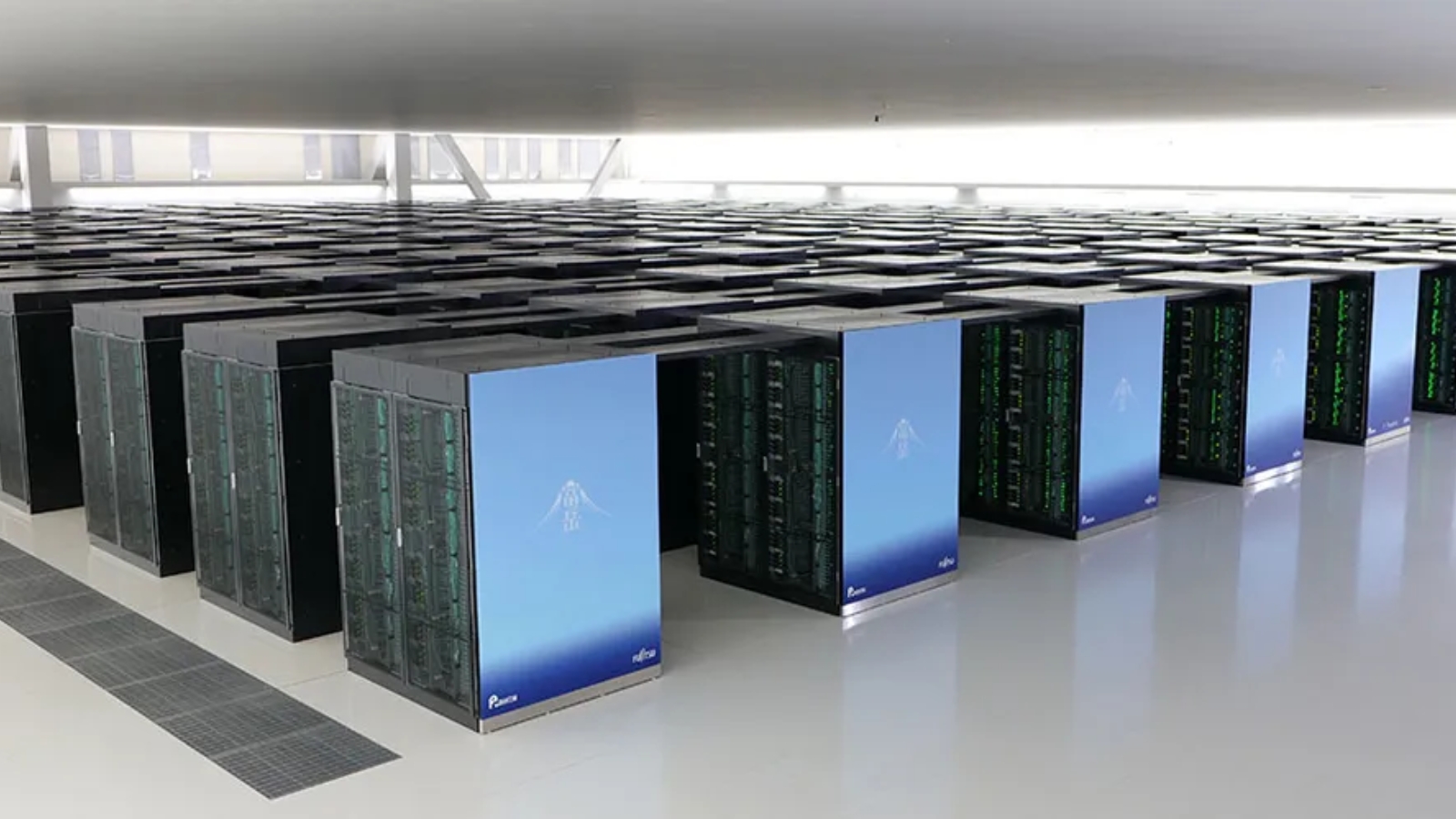
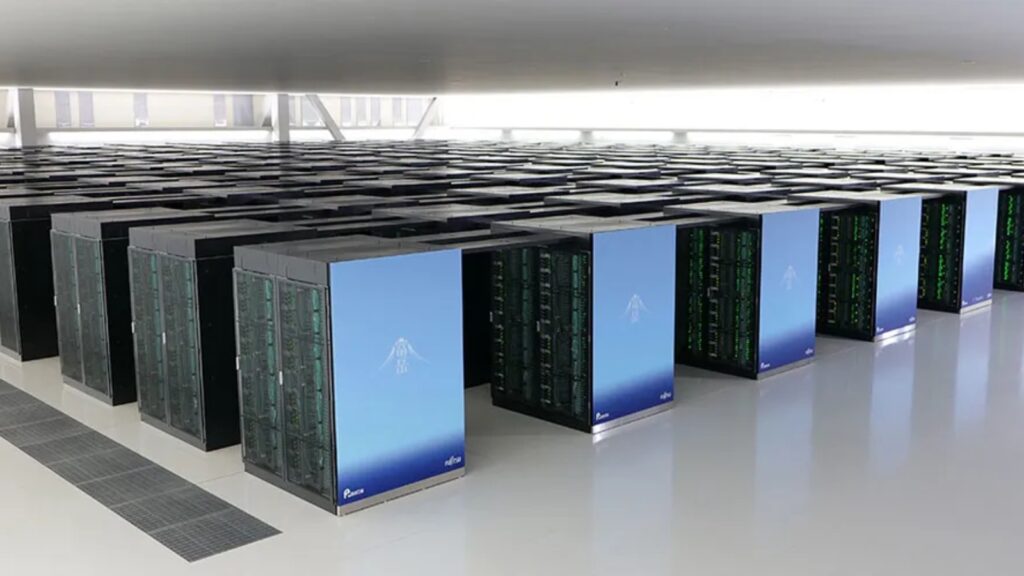
HANAMI promotes European-Japanese collaboration around code development, and hydrogen was our target material. But code is only as useful as the machine it runs on. Through a EuroHPC Extreme Scale Access Call, we obtained node-hours on the Leonardo Booster partition, one of Europe’s flagship supercomputers, and the application form offered us something just as valuable as the hours: EPICURE support.
Tommaso Gorni and Laura Bellentani, belonging to the EPICURE team at CINECA, who know the machine inside out, worked with us to optimise TurboRVB for it. Kosuke joined the discussions from Japan, bringing his knowledge of the code to complement theirs of the hardware, and hydrogen served as the test case, so every optimisation was tested on a problem we actually care about.
EPICURE is the support offered within EuroHPC calls that helps research teams optimise their code for a specific HPC machine, working with the experts who know that machine best.
What the partnership produced
Faster, more portable codes make harder problems reachable, and the results are already visible. HANAMI has led to a publication describing our code developments (doi.org/10.1063/5.0296986), and to a study of the hydride superconductors H₃S and LaH10 that connects their structural and electronic properties, a step towards designing new materials on purpose rather than by luck (doi.org/10.1103/b1dd-gzf3 and arXiv:2608.10428). On the software side, Kosuke has built a new code, inspired by TurboRVB, completely rewritten in Python and JAX, with very good performance on GPUs (arXiv:2607.13781).
Next, we want to integrate machine learning into our QMC codes to improve their accuracy and to make them portable to hybrid CPU-GPU architectures, the future of HPC. Our final horizon is to bring Europe’s new supercomputers, and the codes developed within HANAMI, to important problems such as energy materials.
A word to fellow researchers
Joining a collaborative project like HANAMI expands your network to include people who bring new ideas and expertise in areas such as HPC and code development, which are key to building the tools we need for research. Our Japanese partners showed great availability, enthusiasm and computational skills, and that helped enormously.