


01/07/2026
News
HANAMI team boost scientific research on the Fugaku supercomputer
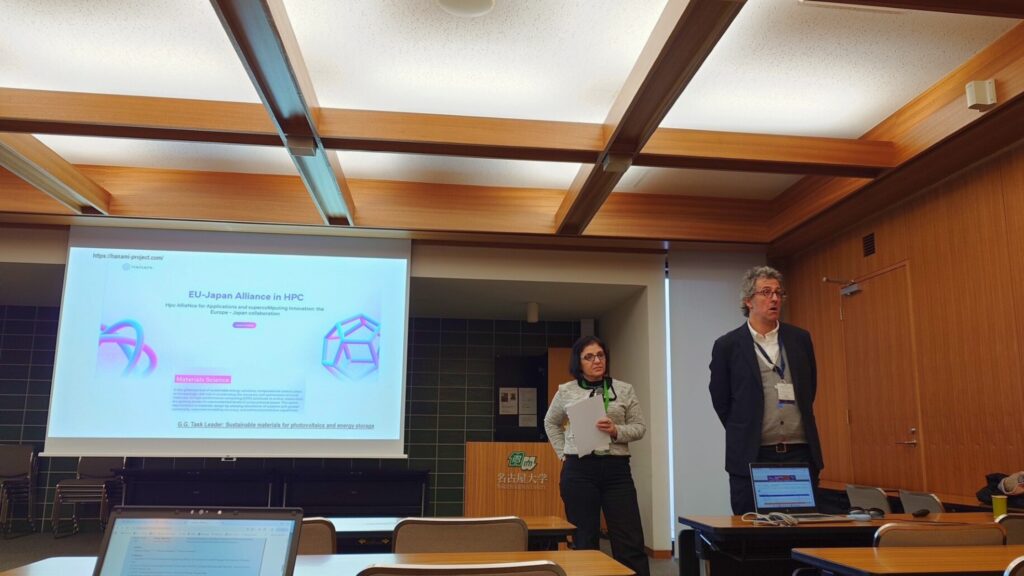
The HANAMI project continues its mission to strengthen Europe–Japan collaboration in high-performance computing (HPC) through joint research activities carried out on Fugaku, one of the world’s most powerful supercomputers.
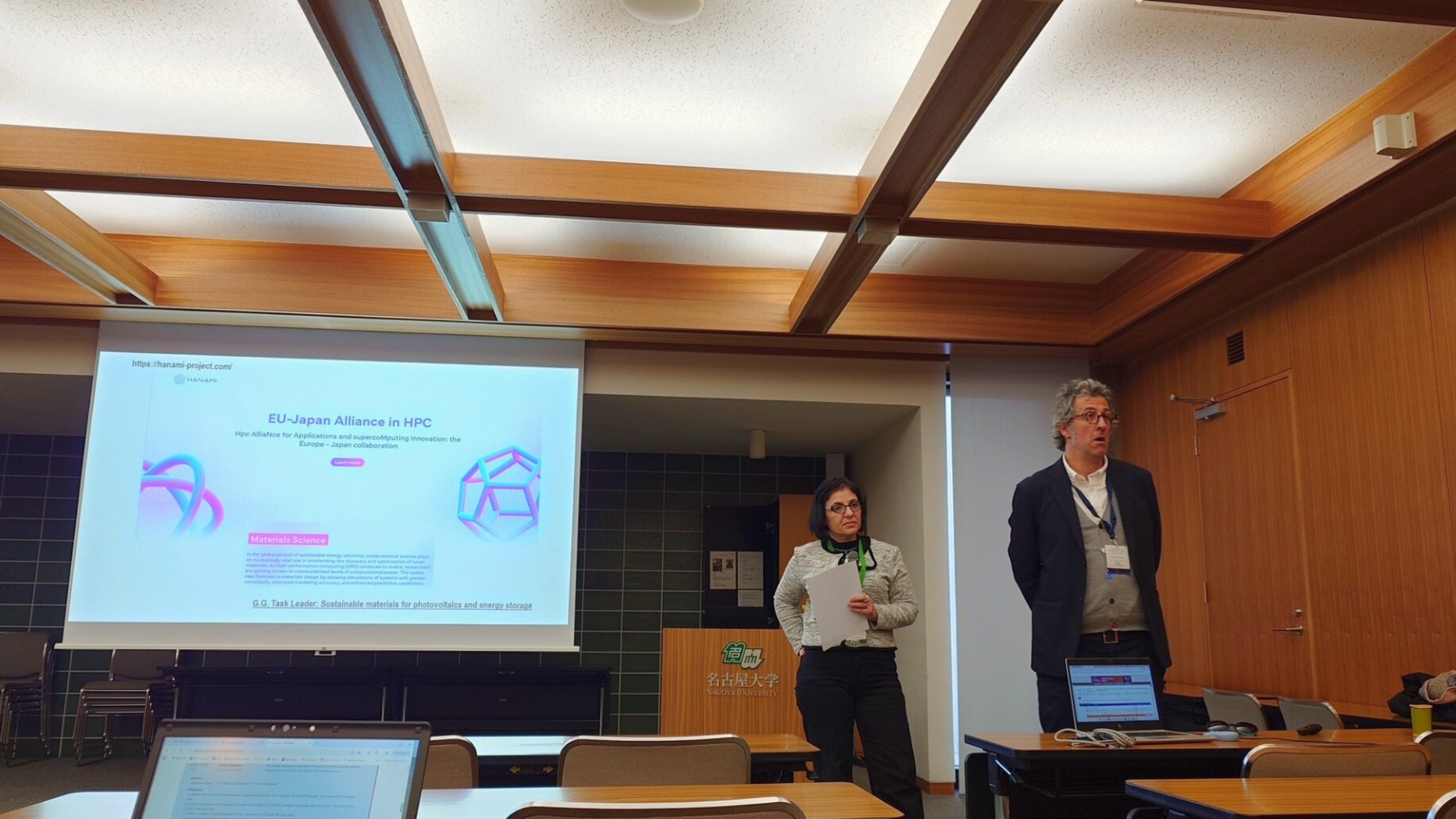
HANAMI researchers from Materials Science (Work Package 6) have been advancing scientific applications, optimising software for next-generation HPC architectures, and supporting research across multiple scientific domains, including materials science, quantum simulations and numerical libraries.
One of the initiatives focused on optimising the Yambo code for Fugaku’s massively parallel ARM-based architecture. Researchers improved OpenMP parallelisation and restructured key computational kernels to reduce time-to-solution while maintaining strong scalability. These developments are now integrated into the Yambo 5.4beta release and also support ongoing work on reduced-precision benchmarks in collaboration with RIKEN.
The Fugaku allocation also supported research into next-generation photovoltaic materials. Using advanced simulations, the team studied the structural, electronic and optical properties of a newly synthesised lead-free perovskite with promising potential for solar cell applications. The work contributes to the development of more sustainable alternatives to conventional lead-based materials.
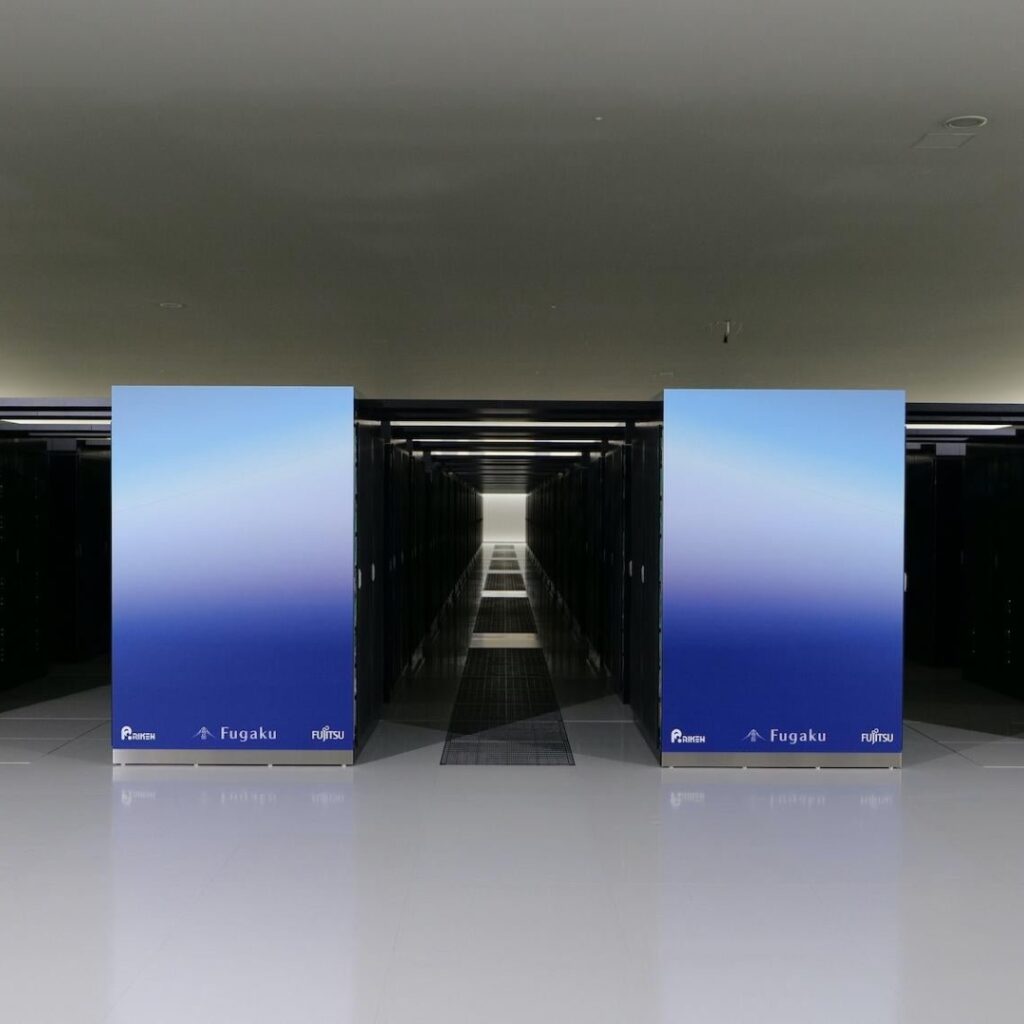
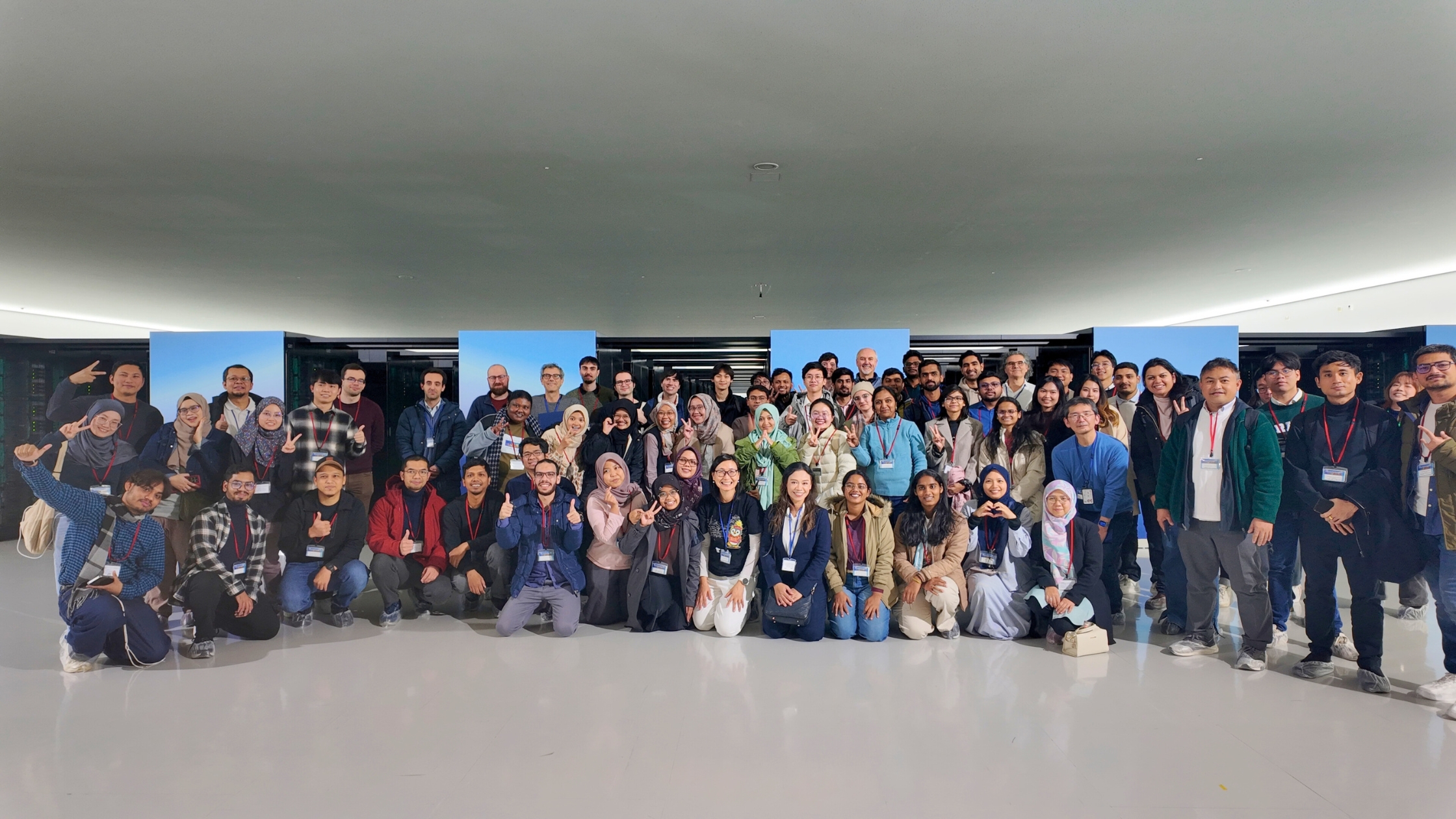
Fugaku supercomputer
In another research line, HANAMI researchers carried out large-scale diffusion Monte Carlo calculations on LaH10, a hydrogen-rich superhydride known for its high-temperature superconductivity under pressure. The simulations generated highly accurate datasets that will support the development of machine-learning interatomic potentials, helping improve the predictive accuracy of molecular dynamics simulations for superconducting materials.
The project also advanced the validation of a new pseudo-Hermitian eigensolver developed as an extension of the ChASE library. Large-scale numerical experiments on Fugaku demonstrated efficient performance on both distributed GPU systems and CPU-only architectures, significantly broadening the library’s applicability to future HPC infrastructures.
Lastly, HANAMI’s work package 6 team also used Fugaku to optimise the SIESTA code for Fujitsu’s A64FX architecture and on the study of water-in-salt electrolytes (WISE) for zinc-based energy storage devices. These simulations provided important insights into electrolyte behaviour, supporting research into more stable and durable battery technologies.
Together, these studies demonstrate how HANAMI is combining advanced scientific applications with software optimisation to maximise the potential of large-scale HPC infrastructures such as Fugaku. The project continues to reinforce Europe–Japan collaboration while supporting the development of more efficient, scalable and reliable scientific computing environments.
For a complete presentation of the activities carried out on Fugaku, read our blog post.