

23/02/2026
Blog
The power of strategic dialogue: How HANAMI drives success
By France Boillod-Cerneux, HANAMI Project Coordinator (CEA), and Pihla Kauranen, Lead Strategist for the Sustainability of the HANAMI Collaboration (CSC – IT Center for Science)
The HANAMI Europe-Japan Strategic Dialogue, held on December 11, 2025, brought together leading researchers, policymakers, and stakeholder experts to explore the future of strategic scientific collaboration between Europe and Japan. Focused on high-performance computing (HPC), from scientific applications to technology development and cross-border innovation, the event highlighted key opportunities for joint initiatives and the role of strategic dialogue in shaping the next generation of scientific breakthroughs.
Participants discussed the impact of HANAMI research and innovation, shared best practices around EU-Japan collaboration frameworks, and strengthened partnerships to drive impactful progress in areas critical to both regions’ technological and societal goals.
The dialogue underscored the importance of continued cooperation in advancing HPC (including related areas such as Artificial Intelligence and Quantum Computing) and sustainable research ecosystems.
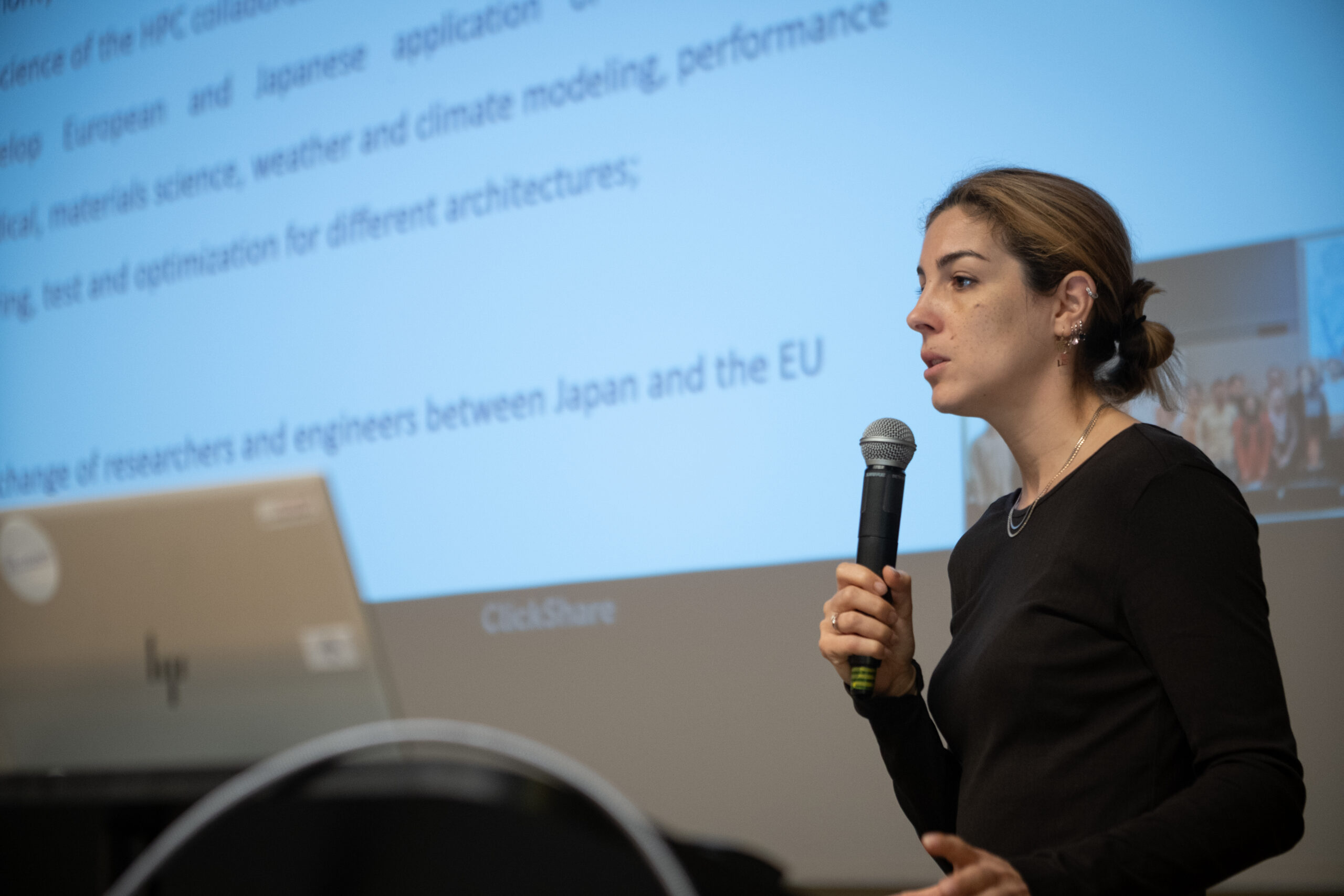
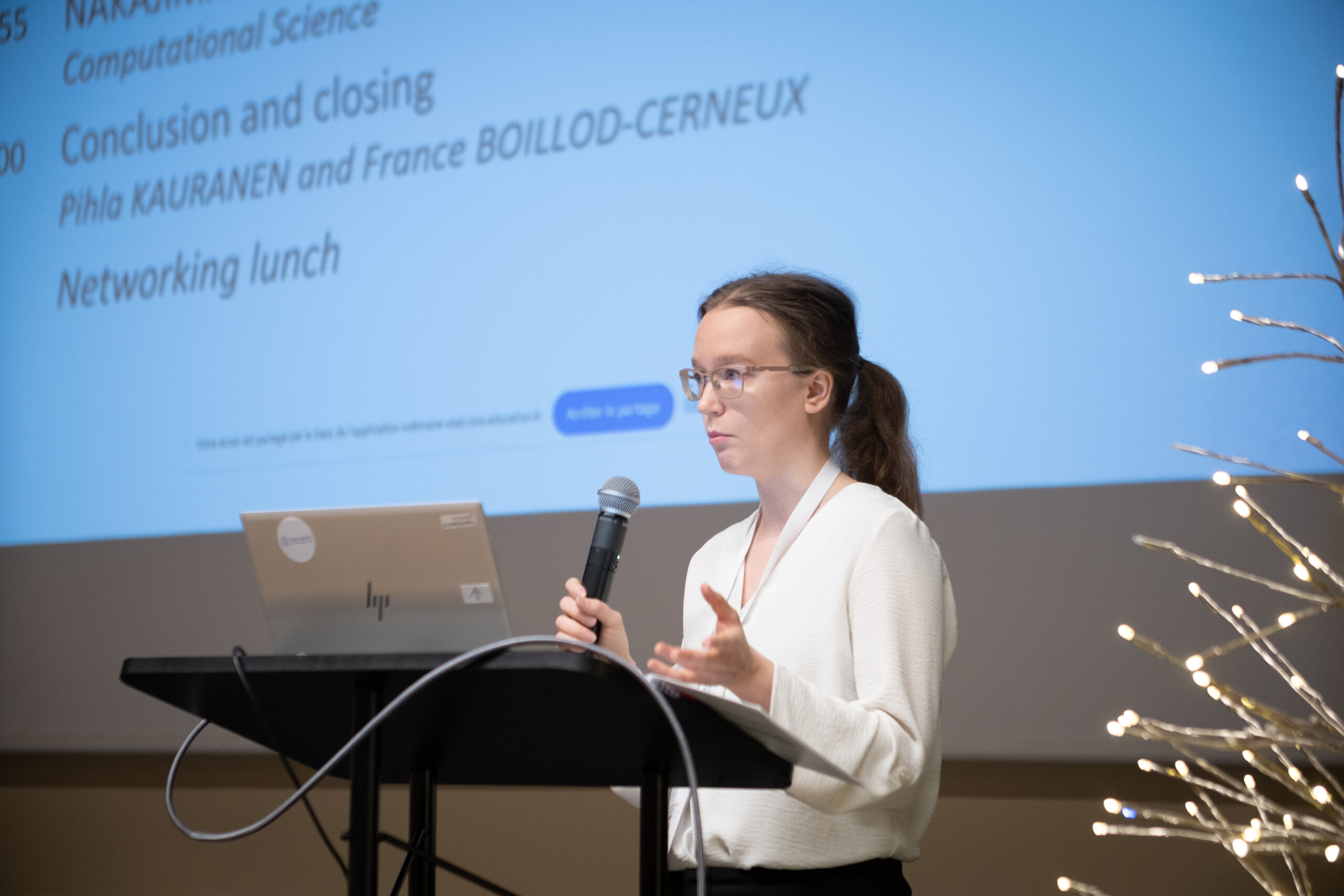
Pihla Kauranen from CSC – IT Center for Science in Finland leads the strategic dialogue between Europe and Japan in the context of the HANAMI project. HANAMI aims to deliver a roadmap for the future of the collaboration, which will enhance HANAMI’s successes and key achievements and propose how the HANAMI framework can be extended to other European and Japanese partners, including other scientific areas of interest for both regions. To design this roadmap, Pihla Kauranen and France Boillod-Cerneux (Project coordinator of HANAMI) engage in discussions with policymakers and other stakeholders, as well as with the HANAMI project itself.
-
- France Boillod-Cerneux
-
- Pihla Kauranen
Why is it crucial to establish a strategic dialogue between Europe and Japan in areas like HPC?
Over the past 15 years, Europe and Japan have significantly strengthened their collaboration in high-performance computing, driven by shared scientific and technological ambitions: innovation, sovereignty and performance. This partnership has been marked by flagship initiatives such as bilateral collaborations between Japanese and European research organisations, and/or supported by the national agencies in Europe and Japan through calls for proposals. Both regions have a similar strategy to develop HPC applications for pre-exascale, exascale, and post-exascale supercomputing platforms. In addition, EU-level cooperation, most notably via the EU–Japan Digital Partnership, helps align priorities and foster coordinated actions, complementing bilateral projects and agency-driven calls for proposals in Europe and Japan.
France Boillod-Cerneux:
“The relationship between Europe and Japan has existed for decades. However, with the computing power growing, the necessity to join forces became more evident: we share the same challenges, not to say “problems”. Increasing the computing power to enhance extreme-scale scientific simulations asks for deep and specified skills in many areas, from scientific fields, like astrophysicians, mathematicians, climate scientists… and computer scientists! HPC is a very specialized domain, andit is definitely strategic for Europe and Japan, which share common values on HPC and in general.”
Pihla Kauranen:
“The investment required to develop exascale computers is huge, both in terms of money and human effort. Being able to share some of this effort with those addressing the same issues and who have complementary expertise makes it more efficient and profitable for everyone. HANAMI has two main goals here producing joint science between European and Japanese researchers within the project framework and facilitating strategic dialogue between Europe and Japan on HPC and Artificial Intelligence. We believe that a shared vision between the two regions is necessary to drive meaningful collaboration and progress in such critical technological fields, but also to signal continuity and commitment in these turbulent times.”
Could you share the key steps in creating and sustaining this strategic dialogue?
Pihla Kauranen:
“Absolutely! We first had to undertake a big effort to identify the target policymakers and stakeholders in the EU and Japan on HPC and related areas. Then we started to build our contacts through communications and targeted visits, for example to Brussels and Japan, to introduce HANAMI and its vision. We really feel that although it requires a lot of work, in-person visits are the core of being able to foster interest, trust and get people engaged in the discussion. For this reason, we also invite our policymaker and stakeholder network once per year to a strategic dialogue event, the theme of which depends on our progress. The first event in January 2025 concentrated on “setting the scene”, so to speak, using examples of existing national and international Europe-Japan collaboration initiatives to kickstart the conversation. The second one’s focus was more on scientific fields to identify possible areas of interest for both regions, according to their current strategic plans. HANAMI aims to identify synergies and propose an efficient framework that could turn the synergies into opportunities and then into scientific excellence by bridging researchers from the two continents.”
France Boillod-Cerneux:
“This work of bringing policymakers and stakeholders together is key, but not sufficient by itself. With Pihla and our colleagues from the HANAMI work package in charge of designing the roadmap for the future, we regularly exchange with HANAMI’s scientific work packages. Designing the strategic dialogue involves both a bottom-up and top-down dialogue. This is key to adjust needs and expectations from both sides. Such dialogue is complemented by targeted “roadshows” that both Pihla and I as well as our colleagues regularly make. Maintaining dialogue with target offices, for example the EU commission and Japanese key offices is also very important. Through this, we can share our successes and identify possible calls for projects or opportunities to extend our collaboration. We also have an opportunity to explain our vision more clearly and in more detail.”
Pihla Kauranen:
“As an example, HANAMI has a specific vision regarding fostering HPC and AI talents in both regions. HANAMI supports young researchers by sending them on exchanges to European and Japanese research institutions. By doing so, we extend the HPC/AI communities and bridge skills between the two continents. Such links are very precious for the sustainability of the HANAMI collaboration.”
France Boillod-Cerneux:
“Absolutely! Some of the students or young researchers we see in our collaboration then become either a postdoc or a permanent researcher in Japan, or vice versa in Europe. These kinds of bonds are the key to establishing lasting, long-term collaborations.”
How hard is it to make a strategic dialogue?
France Boillod-Cerneux:
“Very hard! This is a huge work, and a team effort. But at the end of the day, this is very valuable and considerably enriches the collaboration.”
Pihla Kauranen:
“No single actor involved could do this alone. That’s why it’s important to make sure everyone understands our vision and its benefits. We need both internal dialogue within the HANAMI framework, as well as externally outside the framework, with intensive discussions and meetings. Luckily, we are supported by great scientists and an amazing communication team! Without the team effort, we wouldn’t be able to succeed.”
What is your relationship with Japan?
France Boillod-Cerneux:
“I have been working with Japan since my PhD, so more than 15 years ago (time flies, right?). However, I discovered the country only 6 years ago, and what a surprise it was! It is very different from France, but it really feels like a “second home” to me. It is always a great pleasure to come to Japan. And the best part of it, no matter how many times I went to Japan, I keep being surprised.”
Pihla Kauranen:
“I hold Japan very close to my heart – I’ve long held an interest in the Japanese culture and society, and during my university studies had the opportunity to learn the language and even live in the country for a year. As an outdoor person, I think Japan is one of the most beautiful places I’ve ever seen, and there’s always something new to explore! I’m super happy that I’ve had the chance to professionally engage with Japan through HANAMI, and hope that we can help others discover the same pleasure.”